Palestinian International Organization for Peace and Human Rights
December 25, 2025
A judicial vacuum affecting family affairs
An article published on December 25, 2025, highlighted the disruption of large parts of the Sharia court system in the Gaza Strip, and the resulting difficulty in processing personal status cases. These cases include alimony, child custody, divorce, and establishing family rights.
Loss of records and delays in litigation proceedings
The disruption of the courts extends beyond the closure of buildings; it can also lead to the loss of case files and documents needed by citizens to prove their legal status. The postponement of cases perpetuates uncertainty, particularly for families who have lost their breadwinner or have moved between multiple displacement centers.
Particular repercussions for women and children
The lack of effective legal recourse can place women in economic and social hardship and delay the resolution of disputes related to child support and care. It may also open the door to informal solutions that do not provide sufficient legal safeguards for all parties.
The need to restore justice
The process requires protecting records, gradually restarting the courts, and providing clear interim mechanisms for accessing rights, while ensuring privacy and legal aid for the most affected groups. The right of access to justice remains an integral part of institutional recovery after conflict.
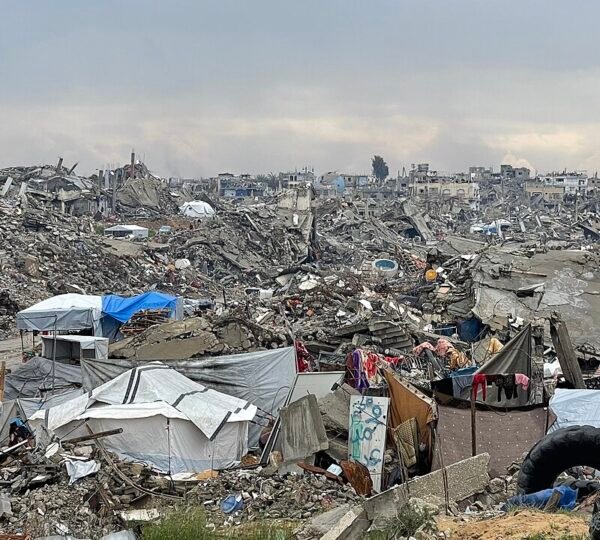
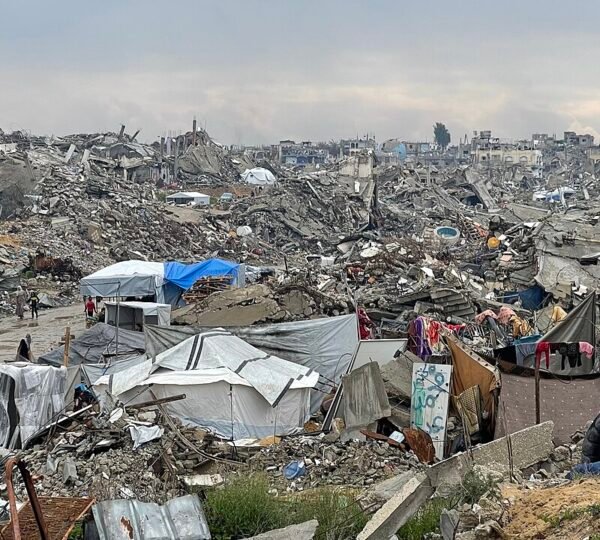
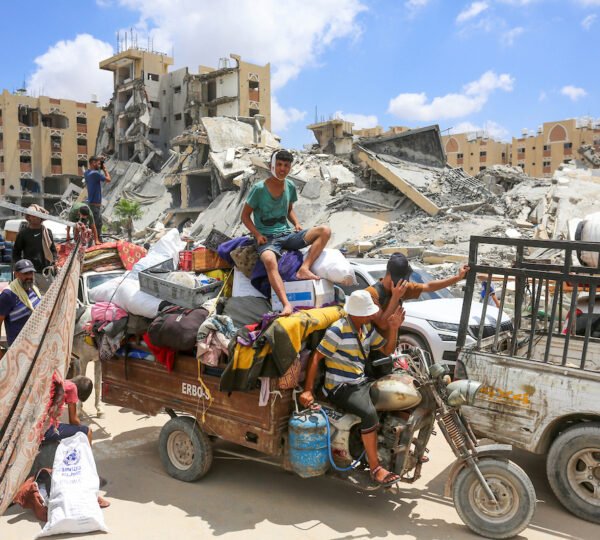
The featured image is for illustrative purposes only and does not document the event itself. The ruins of the Rashad al-Shawa Cultural Center in Gaza are shown in this archival photograph depicting damage to civilian buildings, not a photograph of the courthouse. Photo credit: Jaber Jihad Badwan, License CC BY-SA 4.0 — Image page.